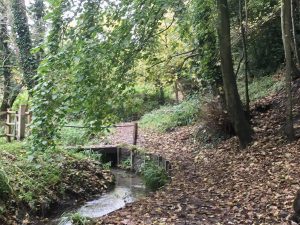
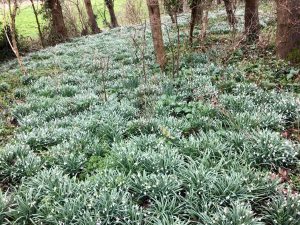
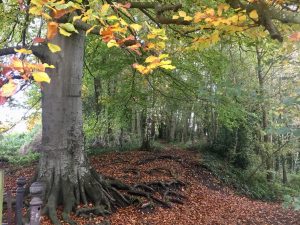
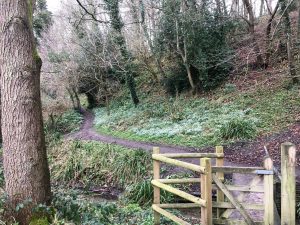
Canada Woods
market lavington
Canadian Troops on Salisbury Plain
At the turn of the century the War Office had acquired an area of some ninety square miles on Salisbury Plain as a military training ground. Extensive artillery and rifle ranges were constructed, and permanent accommodation was provided in barracks begun during
the South African War. The tented camps to which the Canadians now came were on sites where the Territorial Forces had done their summer training for many years. Like the rest of Salisbury Plain the War Office’s acquisition spread over a broad, undulating plateau, the expanse of upland pasture broken only by occasional belts of trees planted as sheep shelters in days gone by.
In the deep valley of the River Avon, which crossed from north to south, several hamlets of ivy-covered cottages clustering around a small stone church and the inevitable wayside tavern formed little civilian islands in the military area. British engineers had put the sites in readiness for the Canadians. The task of setting up thousands of bell tents, marquees, and kitchen shelters had been done ` by fatigue parties from the Territorial Force assisted by a group of New Zealand troops recently enlisted in England. In the hot dry weather which prevailed in the early autumn of 1914 the countryside was at its best.
An officer in the small Canadian advance party reported from Salisbury at the beginning of October: “I must say that the camp sites are beautifully situated and the turf is excellent, and will be quite an agreeable change from the sand plains which our boys have been accustomed to.
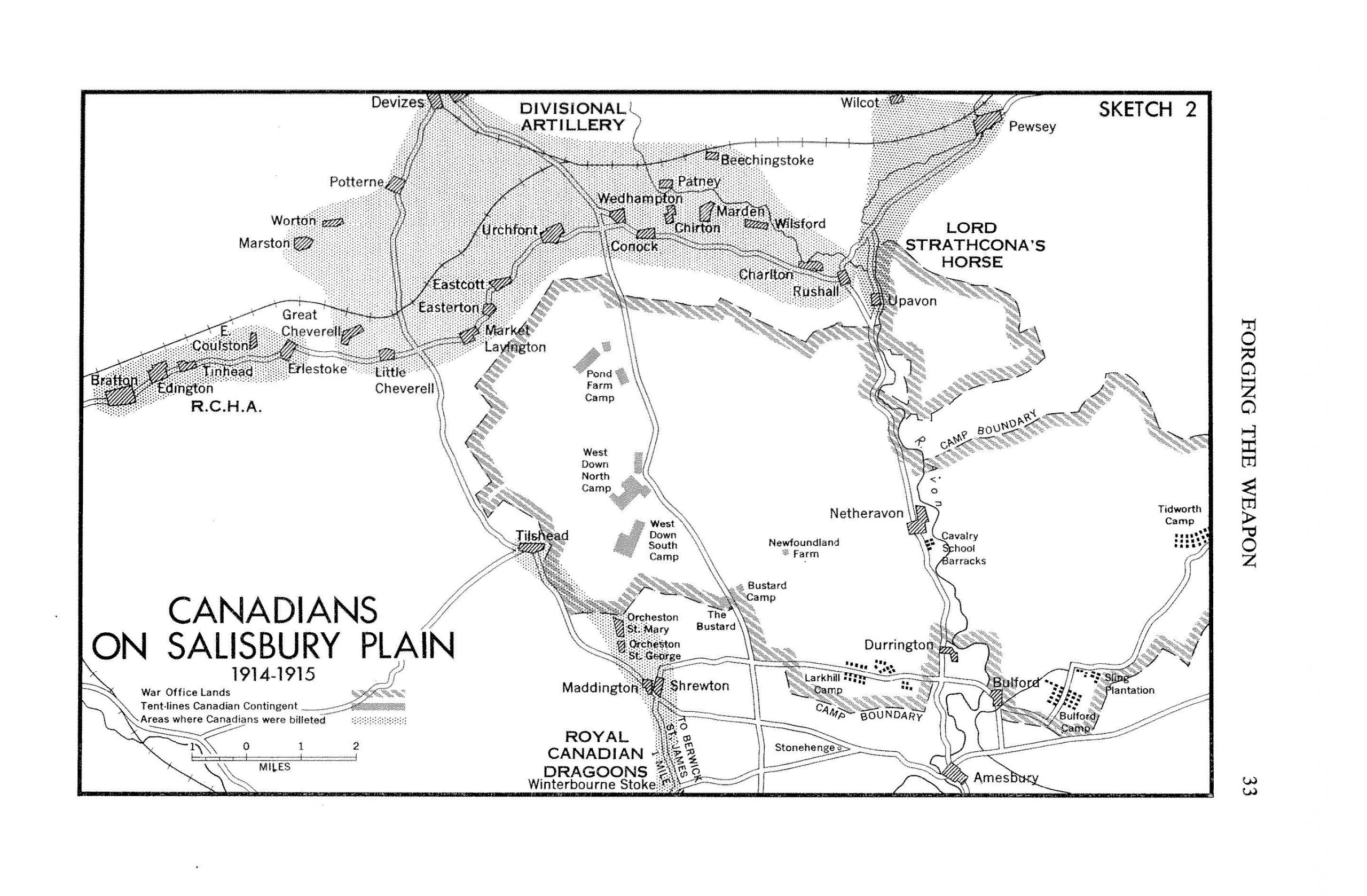
Divisional Headquarters were established at “Ye Olde Bustard”, an isolated inn three miles north-west of Stonehenge. The bulk of the Contingent was distributed in four camps extending for five miles near the west side of the military area. Bustard Camp, beside General Alderson’s headquarters, was given over to the 1st Infantry Brigade, the Divisional Mounted Troops and Princess Patricia’s Canadian Light Infantry; two miles to the north-west the 2nd and 3rd Brigades were in West Down South Camp; a mile beyond in West Down North were all the artillery and the Divisional Supply Column; while two miles farther north the 4th Brigade, the cavalry, the 17th Battalion and the Newfoundland Contingent occupied Pond Farm Camp.
In common with British formations encamped on Salisbury Plain, the Canadian Division formed part of the Southern Command, Lieut.-General Alderson being directly responsible to its General Officer Commanding-in-Chief, and through him to the War
Office. The War Office was the sole channel of communication with the “Colonial authorities”. When Alderson by-passed this channel in replying directly to cables sent to him from Ottawa, he was expressly informed that “direct communication between the
General Officer Commanding 1st Canadian Division and the Canadian Civil or Military Authorities in Canada is not permissible”. Yet Alderson’s responsibilities were obviously wider than those of a British commander of one of the infantry divisions of the British Expeditionary Force, and the restrictions were relaxed pending the setting up of appropriate liaison between the Government of Canada and the Canadian forces in the field.
A preliminary, if informal, move in this direction had already been taken by the Minister of Militia, who was anxious to retain in England as much as possible of the personal control over the Canadian forces which he had exercised in Canada. While the
Contingent was still on the Atlantic, he had crossed by fast ship from New York in order (as the Prime Minister signalled his High Commissioner in London) to brief General Alderson “respecting officer and other important matters”. Sir Robert stipulated that
Colonel Hughes would be going in an “unofficial capacity for a holiday”; he was “not to assume any military command or interfere in military matters”. Hughes visited the Secretary of State for War,
Lord Kitchener, and, according to his biographer, agreed with him that the war would last at least three years. During his stay in England his promotion to the rank of Major General was announced. When he returned to Canada at the end of October he left behind as his “special representative” Colonel J. W. Carson, who had led the small advance party which preceded the Contingent to England.
There is an account by a Canadian officer that while Hughes was in England he defied an order by Kitchener that the Canadian regiments were to be broken up and the men redistributed among British units. The story was recorded only in June 1934, almost twenty years later, and no evidence can be found in contemporary files or in the Borden or Perley Papers to corroborate it. Colonel Hughes himself, who in the course of
Parliamentary debates was never reluctant to recount his exploits as a champion of Canadian rights, is not reported in Hansard as making any mention of the incident; nor did he mention the matter in a letter written to the Prime Minister regarding his visit to
England.
On 7 January 1915, however, Colonel Carson reported to the Prime Minister that he had been asked by Lord Islington (Under Secretary of State for the Colonies) whether the Canadian Government would agree to having selected Canadian battalions or brigades sent to the front. The intention seems to have been no more than to place these temporarily with British units to get them indoctrinated into trench warfare-a plan that was eventually carried out. But when Carson brought the matter to Hughes’ attention, the Minister firmly opposed the scheme, insisting that the Canadians should go into action as Canadian Divisions. Borden appears to have taken no action on Carson’s letter, and on 14 January Perley informed Sir Robert that Lord Kitchener had advised him of his intention to send the Division across the Channel in the first week of February.
Before the last Canadian unit to disembark reached Salisbury Plain the weather had broken. A quarter of an inch of rain fell on 21 October, and a full inch in the next five days. It was the beginning of a period of abnormally heavy precipitation which brought rain on 89 out of 123 days; the fall of 23.9 inches between mid-October and mid-February almost doubled the 32-year average. There was no escape from the ever pervading dampness, and conditions steadily deteriorated. Temperatures were unusually low, on some nights dropping below the freezing point. High winds pierced the light
fabric of the unheated tents, and twice in three weeks gales flattened much of the Division’s canvas. Mud was everywhere. An impervious layer of chalk a few inches below ground-level held the rain water at the surface, and wherever wheels rolled or men
marched the “excellent” turf quickly became a quagmire. All attempts at drainage were fruitless; scraping the mud from the roads only exposed the treacherously slippery chalk.
There were no permanent barracks available for the Canadians, and a programme of building huts begun in October 1914 was overtaken by the arrival of winter. The contractors had taken on more work than they could handle, so that commitments by Lord Kitchener to have all the Canadians in huts before the end of November could not be met. First to move under a roof were the units of the 4th Canadian Infantry Brigade, which on 9 November took over newly
completed hutments at Sling Plantation, north-east of Bulford.
To push the work forward the Canadian Contingent was called on to supply an increasing number of carpenters, bricklayers and unskilled labourers. At the beginning of January some 900 Canadians were under employment to a civilian contractor, drawing besides working pay an extra daily ration of a quarter of a pound of meat. But great as was the need for dry accommodation, the need for training was even greater, and after 8 January demands for labour were made only on the 4th Infantry Brigade, which furnished working parties of 250 men per battalion.
By 17 December the Engineers and the 2nd and 3rd Infantry Brigades had gone into huts at Larkhill, between Bulford and Bustard Camp; but Christmas found 11,000 Canadians still under canvas. From the beginning of the war, the War Office had sought to solve its accommodation problems by billeting a large part of the “New Armies” recruited by Lord Kitchener. Now, as the continual exposure to the wretched weather threatened the health of the Canadians on the open plain, billets were requisitioned for as many as possible in the adjoining villages. Moves into private houses began at the turn of the year, and the names of numerous little Wiltshire communities entered the annals of Canadian regiments villages between Wilton and Tilshead for the Royal Canadian Dragoons, between Upavon and Pewsey for Lord Strathcona’s Horse; to the north the’ artillery were spread out between Market Lavington, Rushall and Devizes; farthest west,
between Bratton and Erlestoke, were the Royal Canadian Horse Artillery. Only the 1st Infantry Brigade remained throughout the winter in tents. Of greater significance to the mounted units than their own move into billets was the fact that at the same time their horses were put under cover and on dry standings. During November and December the condition of the animals had deteriorated seriously through their being forced to stand outside in mud to their hocks, their rain-soaked blankets providing little protection from the elements. Grooming was impossible, nor could sodden leather be kept clean. The change of accommodation worked wonders, and before January ended horses, harness
and saddlery were reported restored to their proper condition.
The general health of the troops was remarkably good, and only after the move into crowded huts were there serious outbreaks of respiratory and intestinal ailments. There were 39 cases of meningitis, 28 proving fatal. Of the four thousand admissions to hospital in the fourteen weeks on Salisbury Plain, 1249 were cases of venereal disease. The training begun at Valcartier was resumed during the first week of November and continued for thirteen weeks under the direction of Southern Command. For the infantry a period of basic training, devoted principally to physical training (which included route marches of progressive length thrice weekly), musketry instruction, foot and arms drill and entrenching, was followed by five weeks of company training, two of battalion and two of brigade training. Except for two officers and five N.C.Os. loaned by the War Office, all instructors were members of the Contingent. British regular divisions in France had amazed the enemy by the speed at which they could deliver their rifle fire, and with this standard before them Canadian infantrymen daily practised charger-loading and rapid fire with dummy cartridges. In comparison with the extensive array of targets at Valcartier, range facilities were limited, and cold weather hampered shooting, but each infantryman fired an allotment of 155 rounds. The artillery ranges also proved inadequate; with six British Divisions competing with the Canadians for their use, the Canadian batteries managed only one week of range practice, firing fifty rounds a battery. The Engineers found plenty to do, supplementing their technical training with practical work on construction projects about the various camps. Tactical exercises were held at all levels of command, but these were frequently interrupted by heavy storms of wind and rain.
Indeed the miserable weather turned training into a drudgery. There were no means of drying clothing, and men who ploughed through ankle-deep mud all day had to let their rain-soaked uniforms dry on their backs. Describing conditions of camp life as “simply appalling”, with the whole camp grounds from Salisbury to Pond Farm “just one sea of mud”, Colonel Carson reported to the Minister on 7 December that he had learned from a large number of medical officers that “the general consensus of opinion is that another two or three months of present conditions in England will have a serious effect on the general health and well-being of our troops”. He felt that “they would have been a thousand times better off in Canada than they are at Salisbury Plains”.
The plight of the Canadians had been studied with no little concern by the Australian authorities, and as a result of the conditions on Salisbury Plain the combined Australian and New Zealand contingents, 29,000 strong, on their way to train in English camps, had been halted at Suez and diverted to training grounds in Egypt.47 Carson’s proposal to Lord Kitchener that the Canadian Contingent should also move to Egypt to train was turned down.
It is surprising that in such deplorable circumstances the Canadian troops maintained a good standard of morale. The enthusiasm with which they had flocked to Valcartier persisted, and in general they bore their adversities with admirable patience, regarding them as the inevitable consequences of war. Officers and men did their best to improve conditions. Welfare agencies helped to ameliorate the lot of the soldier in his off-duty hours. Welcome parcels of food, knitted goods and tobacco came from the Canadian War Contingent Association, an organization of Canadians in England and their friends. The Y.M.C.A. supplied reading material and stationery and operated refreshment centres. The Canadian Field Comforts Commission, organized from voluntary women workers by two Toronto ladies, who on the Minister of Militia’s authority had proceeded overseas with the First Contingent, looked after the distribution of gifts received from Canada.
Regulations for the Canadian Militia dating back to 1893 prohibited alcoholic liquor in camps, and Valcartier had been “dry”. But almost immediately upon taking over command of the Canadians General Alderson had seen the need for establishing wet canteens in the camps. He reported that the controlled sale of beer under military supervision would put a stop to troops going to the neighbouring villages where they “get bad liquor, become quarrelsome and then create disturbances”. In spite of protests from temperance organizations in Canada, the new arrangements proved wise. Nearby villages were placed out of bounds except to men with passes. A rebate of 7h per cent on sales of beer enriched unit funds by $7,500 during November and December. Undoubtedly one of the most important factors contributing to the maintenance of morale was the allowance for all ranks of up to six days’ leave, with a free ticket to anywhere in the British Isles. While many flocked to London (where the disorderly conduct of some cut down the number granted leave), others found their way into English homes to form permanent friendships and to enjoy the warm hospitality extended to the visitors from overseas.
CREDIT*** COLONEL G. W. L. NICHOLSON, C.D.
Army Historical Section
Project Aims & Goals
Regeneration
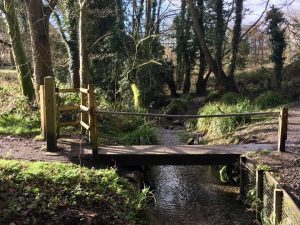
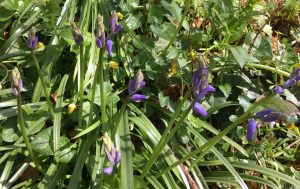
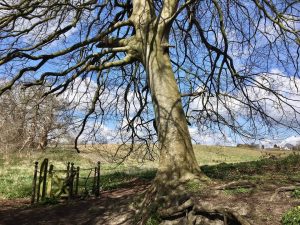
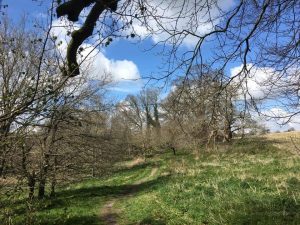
To regenerate the woodland and promote healthy growth for future generations to enjoy.
accessibility
To provide an accessible and inclusive woodland space for the community.
community
To provide a Community Space on the amenity land adjoining Canada Woods known as “Community Park”.
functionality
To provide a useable space for schools and community projects.
positivity
To generate a positive outcome from a two-year pandemic.